Complete Turnkey French Fry Processing Line for Brazil – From Cutting to Frying
October 22, 2026Admin
Share
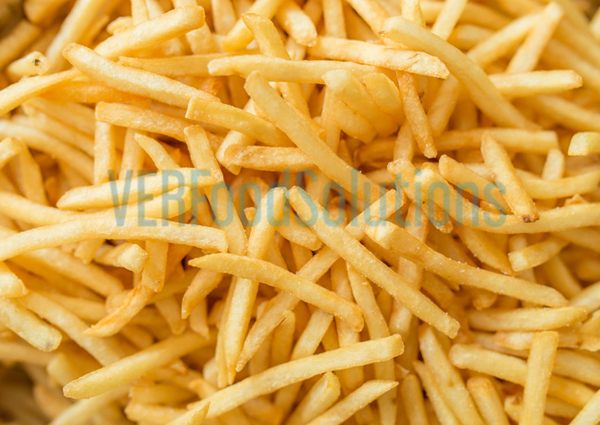
French fries are a favorite around the world, loved for their crisp exterior and fluffy center. As they grew from a simple local snack into a global fast-food staple, the demand for consistent, large-scale production transformed the way they’re made.
Producing the perfect fry takes more than slicing potatoes and dropping them into a fryer. Manual preparation often leads to uneven cuts and inconsistent texture, while driving up labor costs. Our professional French fry production lines help manufacturers produce high volumes of uniform, high-quality fries efficiently and cost-effectively. With solutions tailored to each client’s needs, we make it easier to deliver great taste and texture at scale.
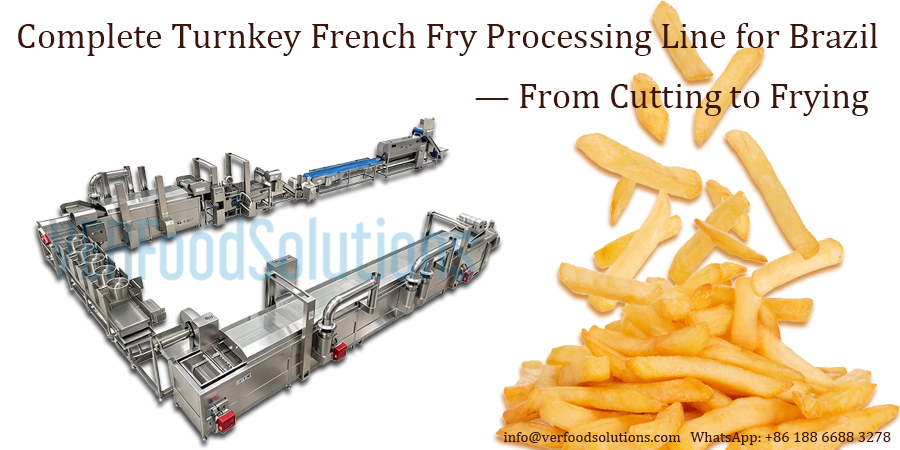
A client in Brazil recently launched a new French fry production project. The production line includes seven machines, arranged in the following order:
Together, these machines process raw potatoes into freshly fried French fries. Let’s take a closer look at how the production line works.
I. Potato Root Vegetable Brush Washing Machine
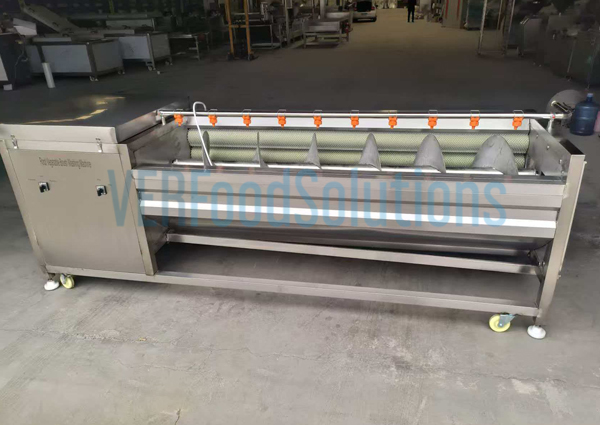
Our client in Brazil selected a 1.5-meter potato root vegetable brush washing machine as the first stage of the production line. It removes soil and surface debris while helping peel the potatoes.
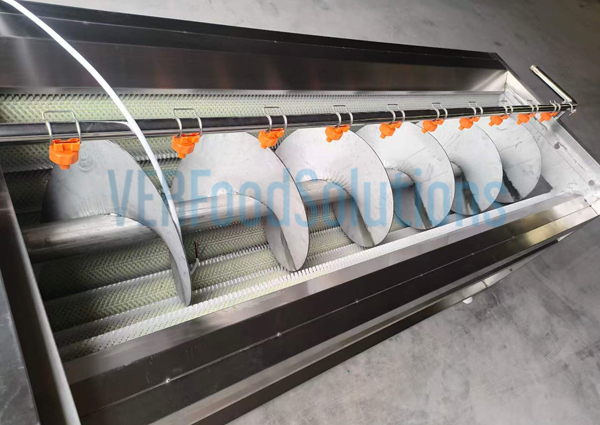
The potato root vegetable brush washing machine features nine internal brush rollers for thorough, all-around cleaning. Their stiff bristles scrub away dirt and debris while gently removing the potato skins.
A large spiral auger inside the washing tank distributes the potatoes evenly as they enter, helping ensure each one receives consistent contact with the brushes. The spiral also keeps the potatoes in the machine longer, preventing them from passing through before they are properly cleaned. As the potatoes move forward layer by layer, they are scrubbed and automatically discharged at the outlet-no manual handling required. This helps reduce labor while maintaining a steady cleaning process.
II. French Fries Cutting Machine
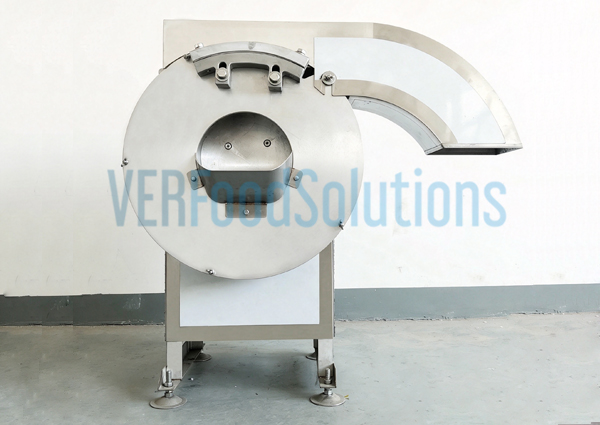
After washing and peeling, the potatoes are conveyed directly to the French fries cutting machine, where they are cut into uniform fry shapes.
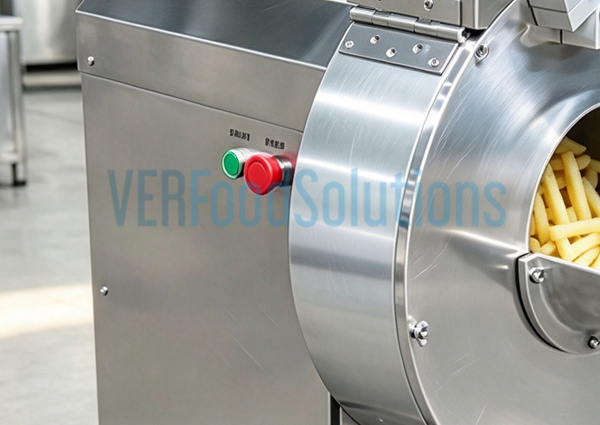
Designed for easy operation, the French fries cutting machine starts with the push of a button. Its large feed inlet connects directly to the outlet of the brush-based root vegetable washer, allowing potatoes to transfer automatically without manual loading-saving time and labor.
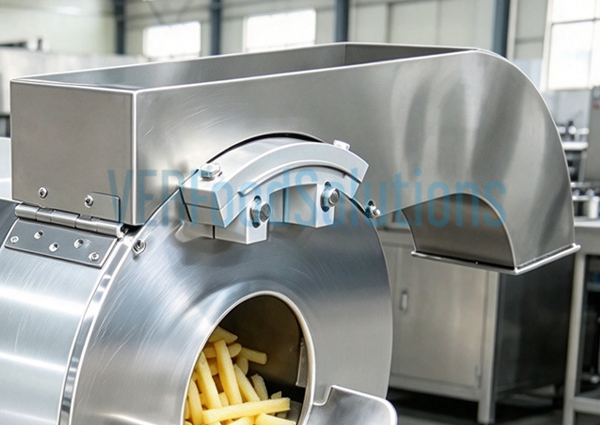
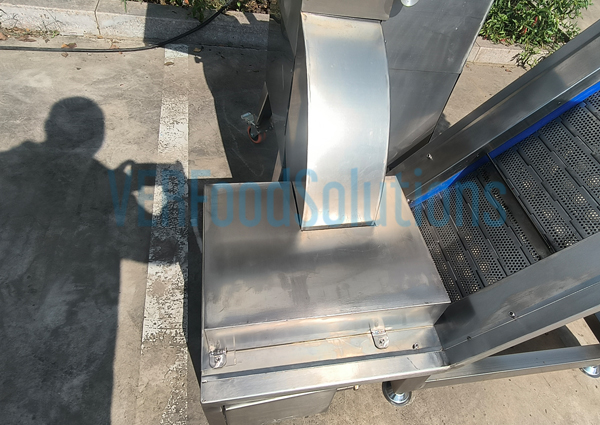
An extended discharge chute of the French fries cutting machine helps the cut fries exit smoothly and reduces breakage. It also makes it easy to connect the cutter to the next machine in the production line.
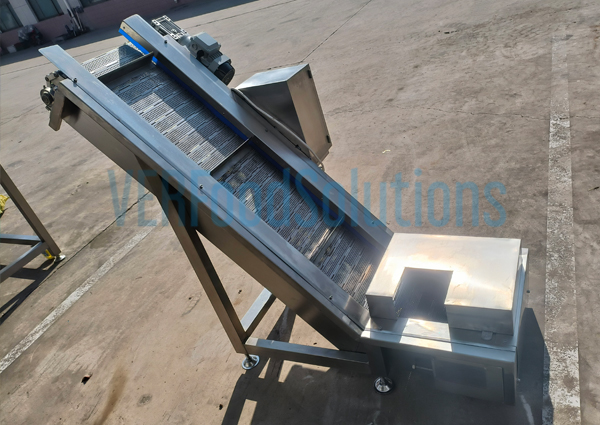
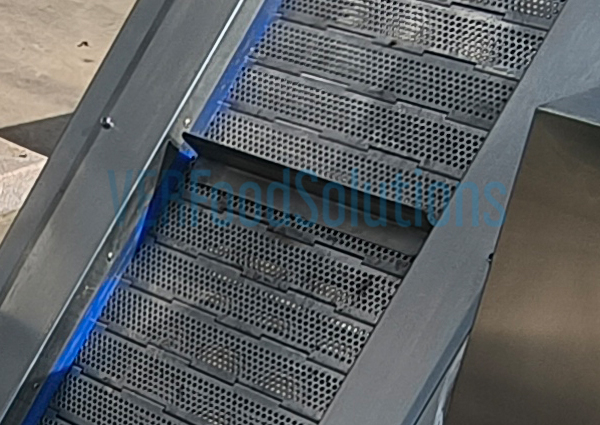
Its mesh belt, fitted with baffles, carries the fries upward in controlled batches to the next stage of processing. By transferring product smoothly between machines, the belt elevator provides an essential link in the production line.
IV. Air Bubble Water Spraying Fruit Vegetable Washing Machine
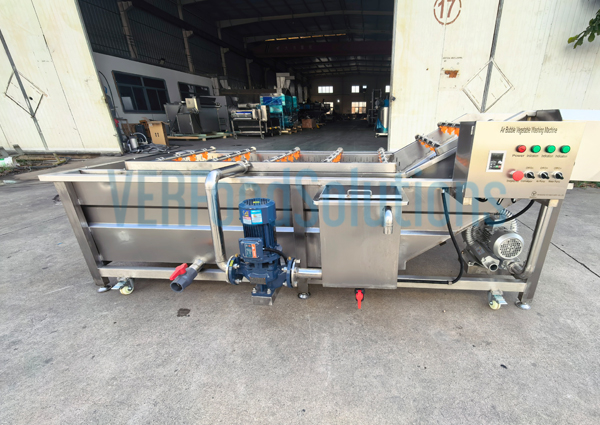
As the fourth stage of the production line, the air bubble water spraying fruit vegetable washing machine rinses the cut potatoes and removes excess surface starch. This helps reduce oxidation and discoloration, preserving the fries’ appearance, texture, and flavor.
1. Control Panel
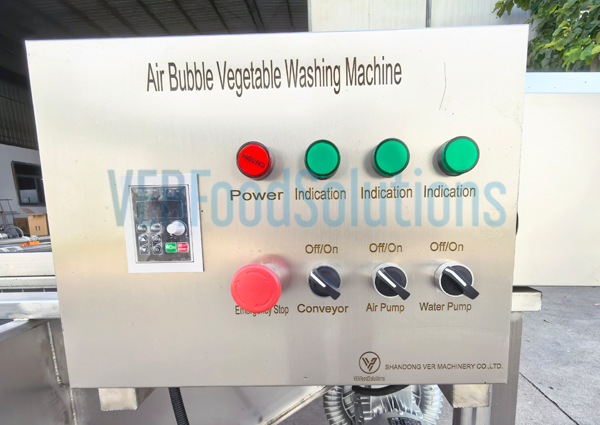
The air bubble water spraying fruit and vegetable washing machine features an intuitive control panel with clearly labeled controls for the main power, conveyor, water pump, and air pump. Its straightforward design makes operation easy, even for first-time users. The interface language can also be customized to meet customer requirements.
The panel has a snap-fit design, allowing convenient access to electrical components and internal wiring for inspection.
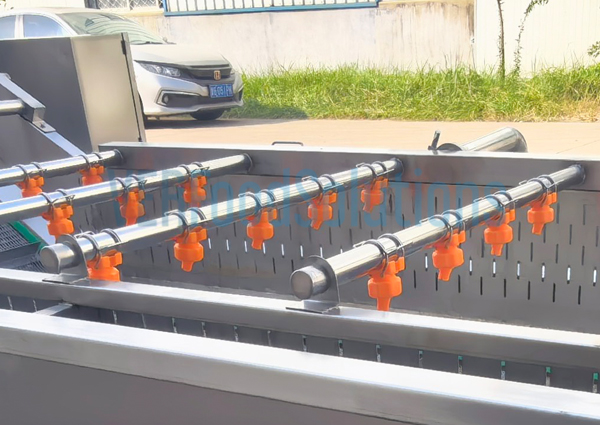
The nozzles can be adjusted manually, allowing operators to change the spray angle to suit different cleaning needs.
3. Overflow Outlet
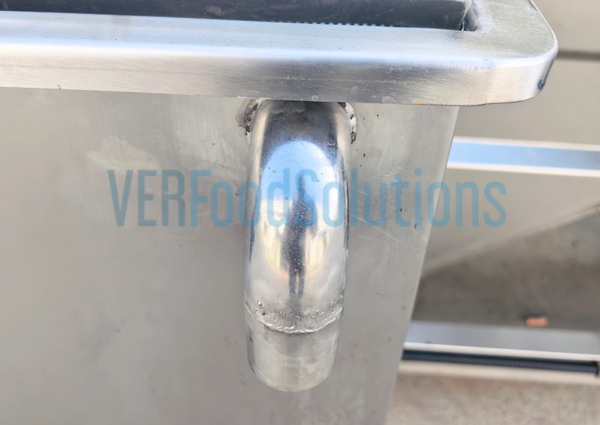
A side-mounted overflow outlet helps prevent water from spilling over the air bubble water spraying fruit and vegetable washing machine if the water level rises too high during filling. Connect a hose from the outlet to a floor drain to direct excess water away, helping keep the workshop clean and safe.
4. Filter Tank
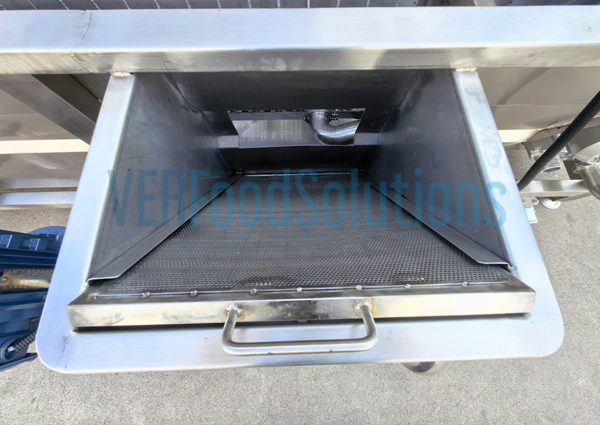
A filter tank is mounted on the side of the air bubble water spraying fruit vegetable washing machine. During operation, water circulates through the tank, where a perforated plate filters out impurities. This helps keep the water clean and allows it to be reused, reducing water use, costs, and downtime.
5. Baffles
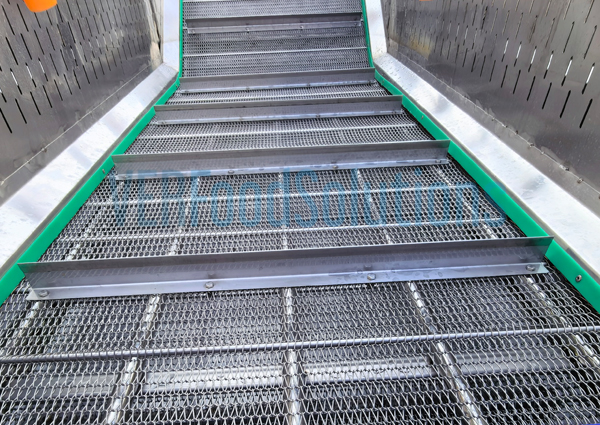
Baffles on the conveyor belt of the air bubble water spraying fruit vegetable washing machine, which help divide produce into batches and move it along the line. Their spacing can be customized, typically from 60 to 80 centimeters, to suit the product and production requirements.
V. Blanching Machine
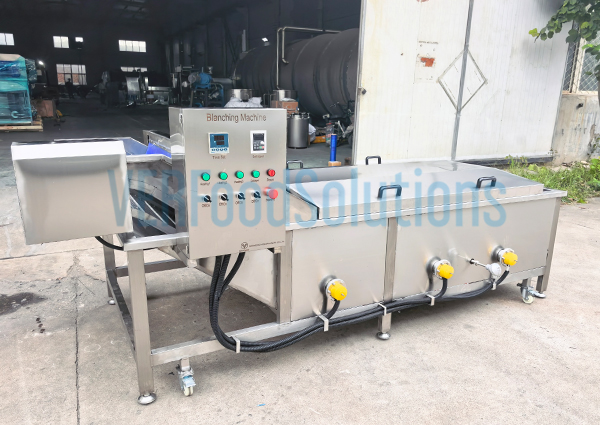
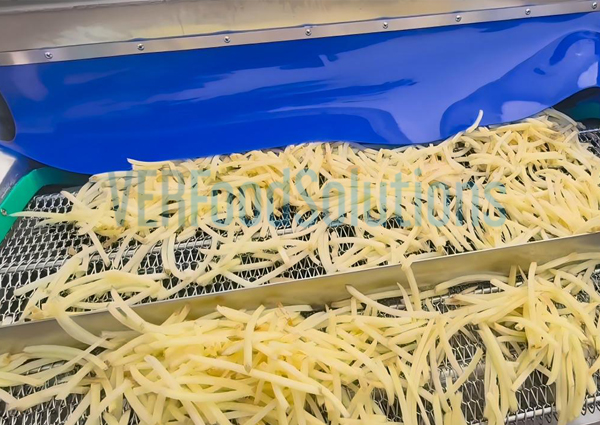
After washing, the potato strips are blanched by blanching machine to prepare them for frying. While washing removes surface starch, blanching helps deactivate enzymes and gelatinize the starch inside the potatoes, supporting a more consistent frying result.
1. Control System
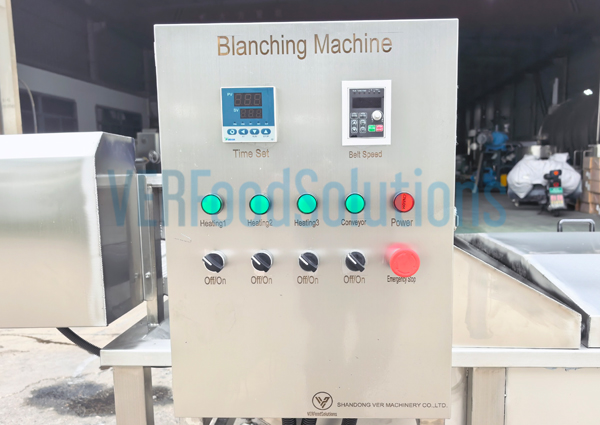
The blanching machine features an intuitive control panel with clearly labeled buttons and switches, making it easy to operate-even for first-time users. The interface language can also be customized to meet the client’s requirements.
Two display units provide precise control. The variable-frequency drive (VFD) on the left adjusts the conveyor speed, while the temperature controller on the right lets operators set the desired heating temperature. The system monitors and controls temperature across multiple zones, automatically stopping the heat supply once the target temperature is reached. This helps reduce energy consumption and maintain consistent blanching conditions.
2. Thermal Insulation System
The blanching machine has a double-layer stainless steel body with rock wool insulation to minimize heat loss. Its water-sealed lid helps prevent steam from escaping around the edges, improving heat retention and reducing the risk of operator burns. A vent on top of the lid directs steam and hot air to a single exhaust point.
3. Heating Elements and Temperature Probes
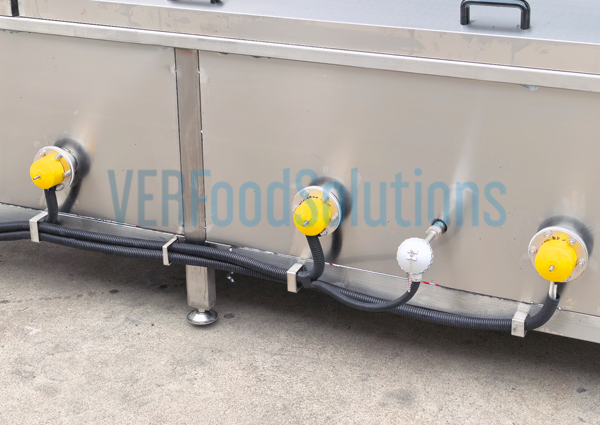
Heating elements and temperature probes are installed along the sides of the blanching machine. The evenly distributed heating elements promote uniform temperatures throughout the blanching zones, while the probes monitor the water temperature and display readings on the control panel for easy adjustment.
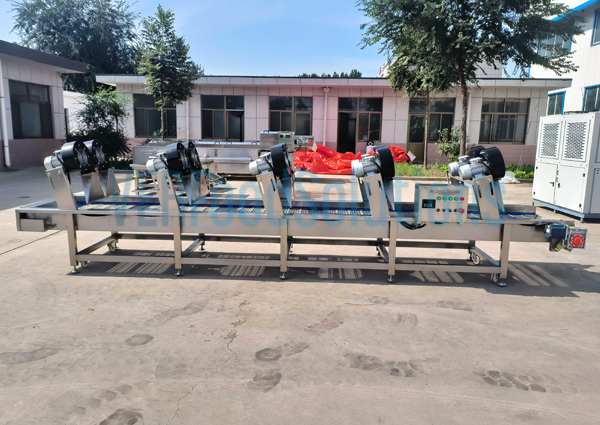
Blanched potatoes are soft and more prone to breaking, so this parallel air drying machine conveys them horizontally without turning or tumbling them, helping preserve their shape.
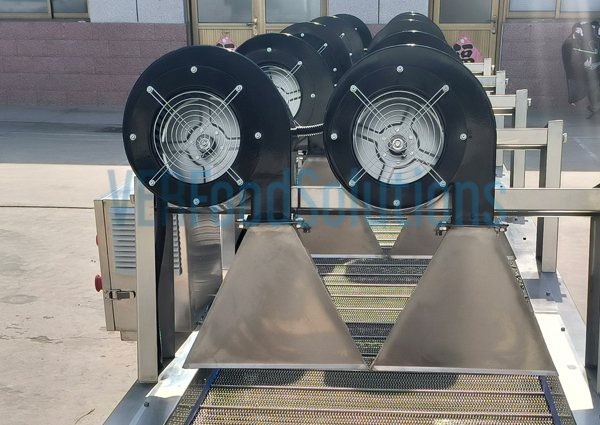
1. Air Knife Fans
The parallel air-drying machine is equipped with air-knife-style blowers. Narrow, elongated air outlets deliver a concentrated, high-velocity airflow to remove moisture efficiently.
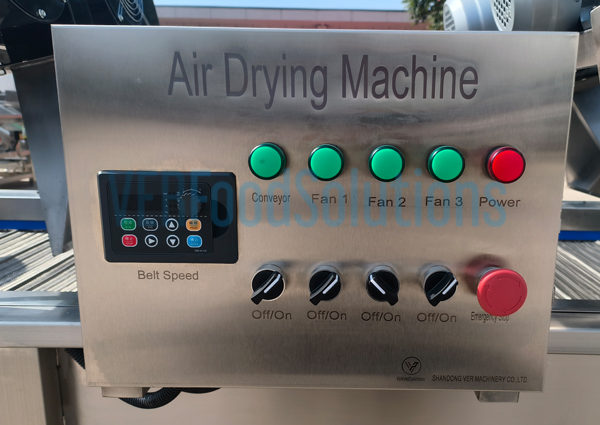
2. Control Panel
The parallel air-drying machine is equipped with a user-friendly control box featuring clearly labeled, intuitive buttons for power, conveyor, and fan operation. It also includes a variable-frequency drive (VFD) for the conveyor, allowing for real-time adjustment of the mesh belt speed. Even operators with no prior experience can easily master the machine. Furthermore, we can customize the interface language to meet specific customer requirements.
To facilitate the inspection of electrical components and internal wiring during ongoing use, the unit utilizes a snap-fit design, allowing for easy opening and closing of the control panel.
VII. French Fries Continuous Frying Machine
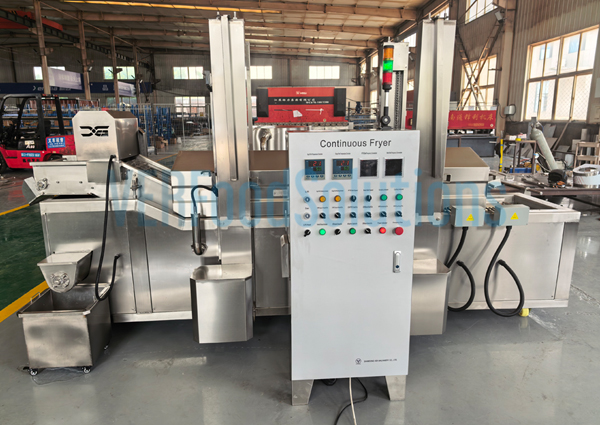
After surface drying, the potato strips are ready for frying. As the final processing stage, the French fries continuous frying machine cooks them to a crisp, golden finish while keeping the inside soft.
1. Double-Layer Mesh Belt
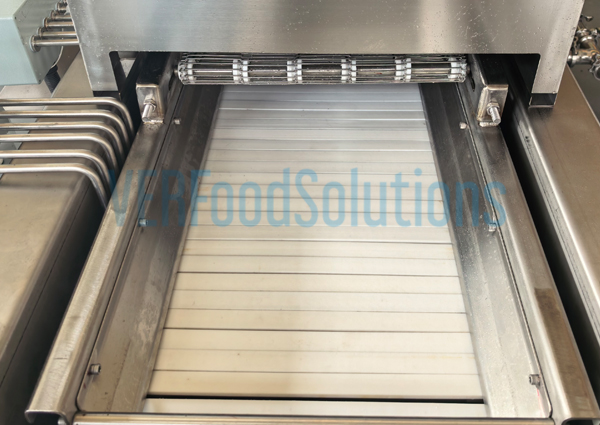
Our continuous French fry fryer uses an upper-and-lower mesh belt system to convey food efficiently through the oil. The belts keep products submerged for thorough frying and help prevent them from floating.
A vector variable-frequency drive lets operators adjust conveyor speed to control frying time and production output. The two belts are designed separately, and the upper belt’s height can be adjusted to accommodate products of different thicknesses.
At the infeed end, the conveyor uses polytetrafluoroethylene (PTFE), known for its chemical stability, corrosion resistance, low friction, and non-stick properties. This helps prevent food from sticking to the belt and supports reliable, long-lasting operation.
2. Safe Lifting System
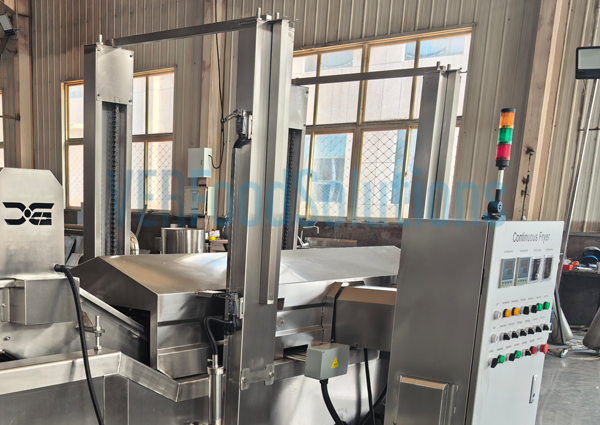
The French fries continuous frying machine‘s lifting system is operated using switches on the support columns. First, secure the mesh belt to the exhaust hood. Press and hold the “raise” button to lift the assembly; it stops automatically at the preset upper limit. Press and hold “lower” to lower it until it reaches the lower limit.
For cleaning, the exhaust hood can be raised on its own or together with the mesh belt support frame and heating elements. A safety bar locks the support frame in the raised position to prevent it from descending accidentally.
3. Longitudinal Scraping Slag System
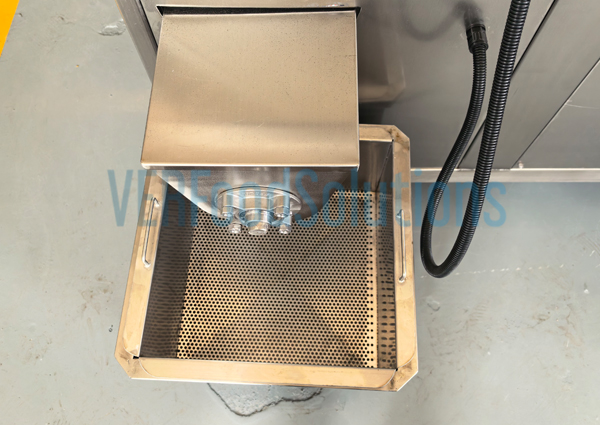
On French fries continuous frying machine, an automatic longitudinal sediment removal system continuously scrapes residue from the frying oil to help keep it clean. The collected residue is pushed forward into a collection cart for easy disposal.
4. Easy-to-Use Control Cabinet
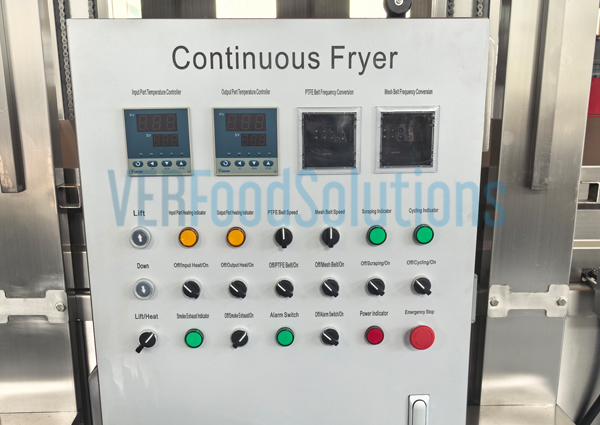
The French fries continuous frying machine features an intuitive, all-English control panel for managing key operating settings. Operators can adjust frying time, temperature, mesh-belt speed, and the belt-lifting mechanism to suit production requirements. This centralized control helps streamline operation and supports consistent, efficient frying.
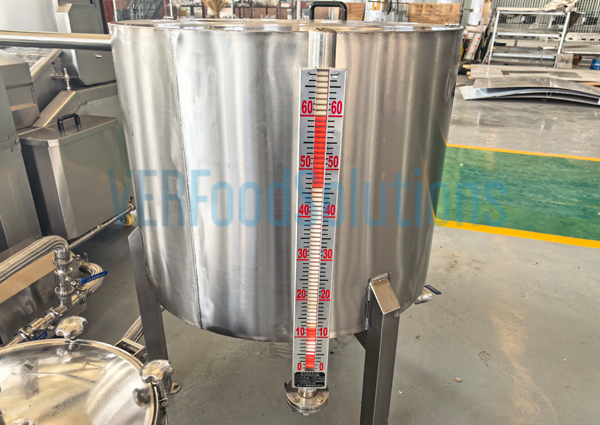
5. Oil Tank-Magnetic Level Gauge
The continuous French fry frying machine is equipped with an oil reservoir to support a steady supply of oil during operation. A magnetic level gauge is mounted on the outside of the reservoir, allowing operators to check the oil level quickly and clearly without opening the tank. This makes routine monitoring more convenient and helps operators determine when additional oil is needed, supporting smoother production and easier day-to-day operation.
The line can be customized to suit your facility layout, available floor space, production capacity, and operational requirements. Thoughtful equipment arrangement helps make effective use of space while supporting smooth product transfer between stages. User-friendly controls simplify operation, while features such as thermal insulation, adjustable conveyor speeds, and gentle horizontal drying help operators manage processing conditions and protect product quality.
Whether you are planning a new facility or upgrading an existing production line, our team can help you select and configure equipment to match your goals. We provide tailored solutions designed around your products, workflow, and site conditions, along with support throughout the planning process.
Contact us today to discuss your requirements and explore a customized French fry production line that can help improve workflow, increase efficiency, and support consistent production.

Leave a Reply