Selecting the right encrusting machine depends on your production scale, product type, and specific requirements:
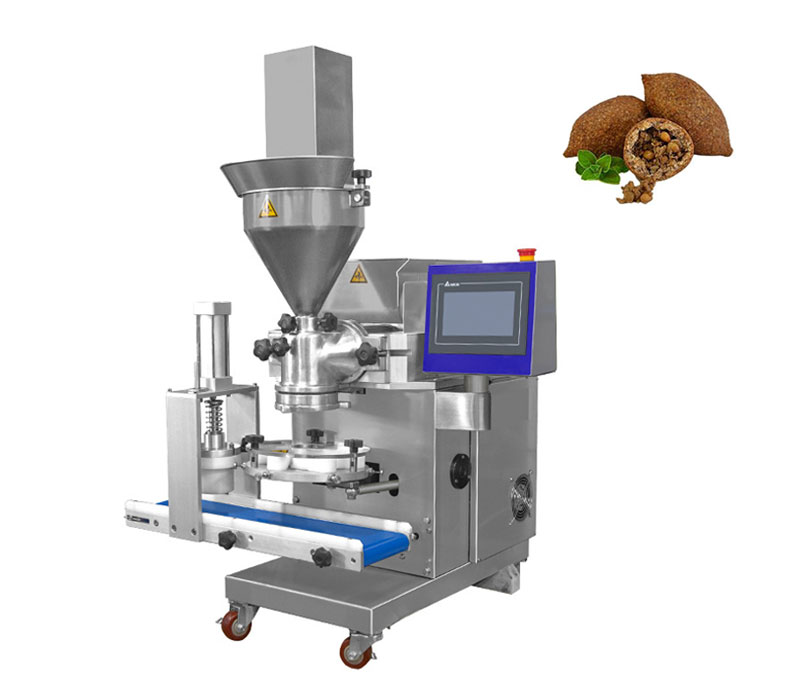
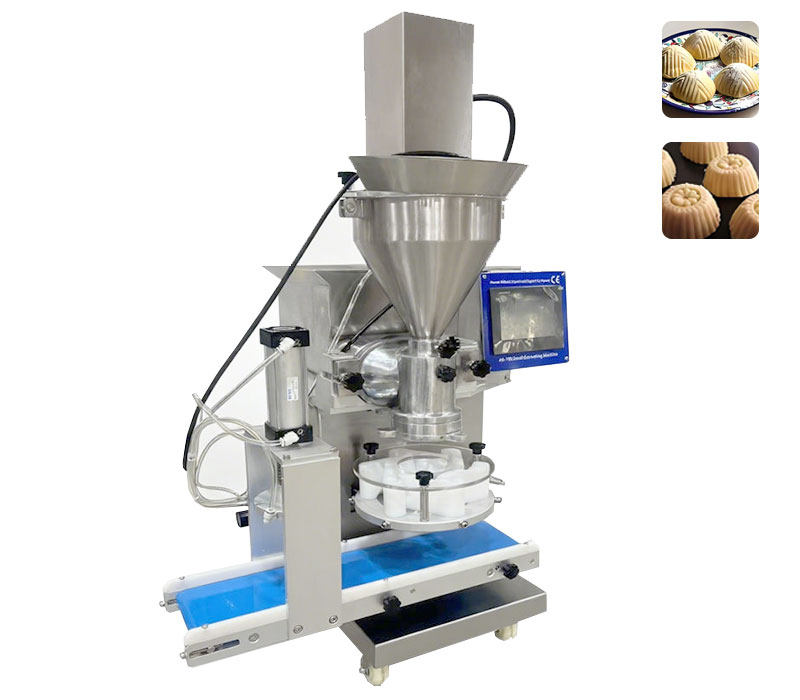
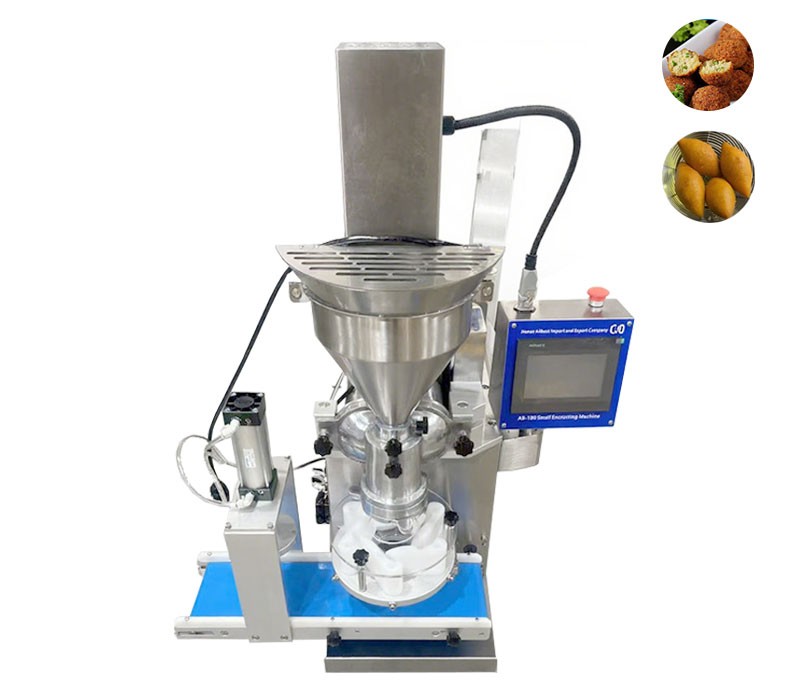
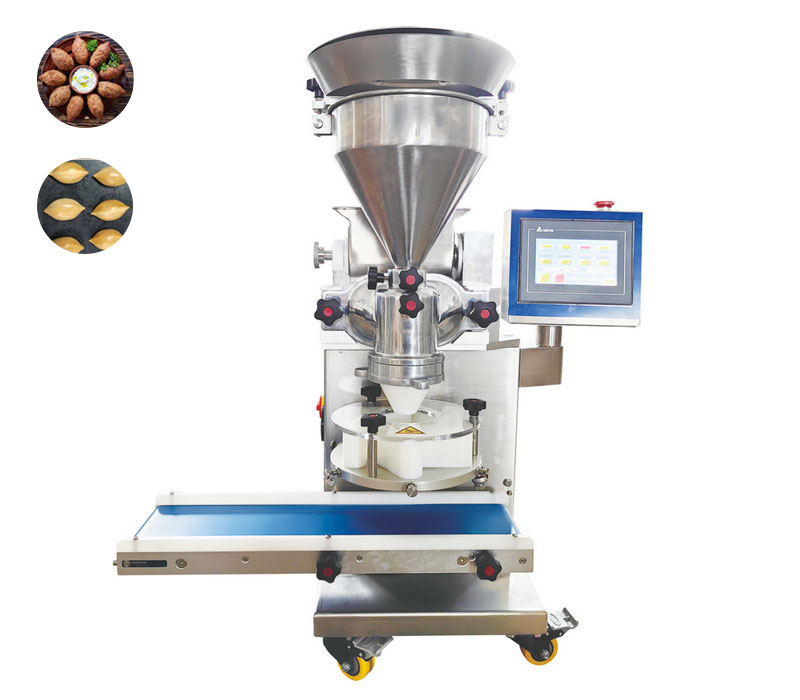
1. For Small-Scale, Household, or Restaurant Use: Opt for the tabletop kubba machine. It features a simple, two-layer structure with no stirring system, ideal for small batches with a minimum weight of 10g. It offers adjustable output (20–80 pieces/min), product weight (10–150g), and supports custom shapes with an optional pressing device, perfect for artisanal and small-store operations.
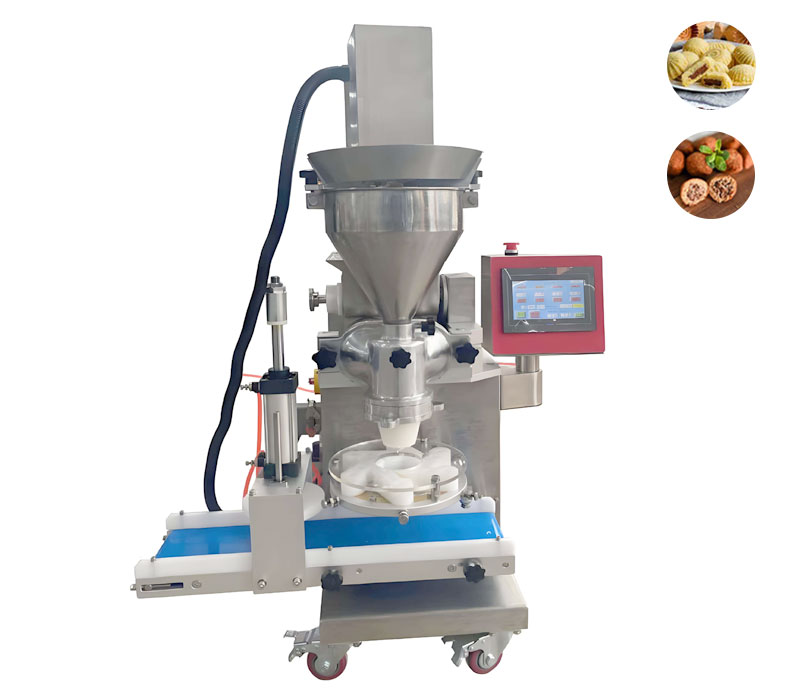
2. For Medium to Large Food Production (Baked, Fried, Steamed, or Frozen Products): Choose the encrusting forming machine. It has a professional dough stirring system, stepless speed adjustment (up to 120 pieces/min), and accommodates a wide weight range (10–280g). Suitable for diverse food types including baked goods, snacks, and even pharmaceutical granules.
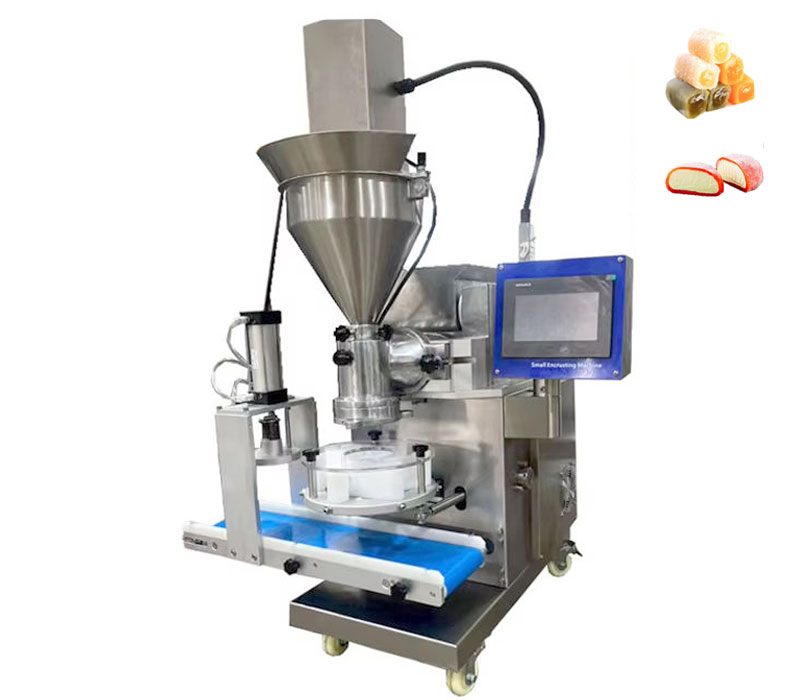
3. For Producing Sticky or Large-Size Mochi, Ice Cream Mochi, or Daifuku: Consider the mochi encrusting machine. Its unique three-layer structure with dual filling layers and a dedicated stirring system allows stable production of large, sticky mochi products up to 750g, at a rate of 20–120 pieces/min, ideal for specialty confectionery.
Additional Tips:
- Match your production volume to the machine’s capacity.
- Consider product texture and size; the mochi encrusting machine excels with sticky, large items.
- Evaluate compatibility with automation components if you aim for full integration.
Our machines are designed with premium materials, intelligent control systems, and safety features to ensure reliable and efficient operation tailored to your production needs.
To ensure you choose the right machine, follow this standardized, step-by-step inquiry process, designed for quick and accurate model matching:
Step 1: Confirm Product Type & Raw MaterialProvide photos of the finished product and videos of the raw materials. Visuals help determine if the machine can produce your food and identify the suitable model.
Step 2: Confirm Product Shape (for cutter matching)Specify the desired shape of the finished product (e.g., round, oval, strip, diamond, water-drop, or custom irregular). Different shapes require specific cutters and baffles, which are critical for proper configuration.
Step 3: Confirm Exact Weight Data (for mold matching)Provide the skin weight and filling weight per piece (not total weight). Accurate weights ensure the correct molds, nozzles, and delivery settings for stable shaping and consistent product ratios.
Step 4: Confirm Production Capacity NeedsSpecify your required output: pieces per hour or kilograms per hour. This helps select a machine with the appropriate speed and performance for your production scale—whether for large batches or small trials.
Step 5: Confirm Post-Production Processing & Supporting EquipmentIdentify your subsequent processing steps, such as baking, frying, steaming, or freezing, and any additional functions like rounding, tray arranging, powder or sesame coating. This ensures the supporting equipment matches your production line.
Step 6: Confirm Customization & Power Requirements Specify any special needs:
- Control panel language preferences (Chinese, English, Arabic, Spanish, etc.)
- Voltage standards (supporting different regional power supplies)
The encrusting machine is highly versatile and suitable for a wide range of food products, including:
Traditional Bakery & Pastry Items According to Different Area of the World:
1. Asia & Local Favorites:
Mooncakes, pineapple pastries, shortbread, wife cakes, peach pastries, green rice cakes, sesame balls, crispy pastries, tea cakes, chicken cakes, hawthorn Guo Kui, coconut pastries, taro cheese balls, glutinous rice cakes, sticky rice cakes, sugar oil cakes, leaf-wrapped cakes, cheese cakes.
2. Europe & Western Countries:
Croissants, éclairs, Danish pastries, profiteroles, tarts, biscotti, cannoli, macarons, filled pastries.
USA & Canada: Muffins, donuts, cookies, bagels, stuffed crust pizza, snack bars, energy bites, muffins, croissants.
3. International Ethnic & Western Snacks:
Kubba/Kibbeh, falafel, coxinha, croquettes, arancini, churros, ladoo, tambun biscuits, piroshki, nastar, rasgulla, gulab jamun, tulumba, bunuelos, arepas, knodel, quenelle, kachori, Turkish bulgur balls, tamarind balls.
4. Meat & Seafood Balls:
Meatballs, pork, beef, fish, crab, fish roe, colorful fish balls, potato, pumpkin, egg white, jujube, squid, kebabs, and crystal balls.
5. Glutinous Rice & Mochi:
Mochi, ice cream mochi, baked mochi, stuffed mochi, glutinous rice desserts, and red bean glutinous rice cakes.
6. Fried & Quick-Frozen Snacks:
Fried dough balls, vegetable and meat pies, stuffed pancakes, crispy rolls, zongzi, durian ice zongzi, potato balls.
7. Cookies & Exotic Pastries:
Sandwich biscuits, twisted biscuits, mosaic biscuits, panda biscuits, chocolate cookies, jam and fruit strips, almond pastries, polvoron.
8. Energy & Health Desserts:
Energy balls, protein balls, protein sticks, energy sticks, chocolate truffles, stuffed jujube balls, longan balls.
Regular Inspection and Operation Check: When the machine is first put into use or after a long shutdown, run it idle for 10 minutes to observe all parts in operation. During this time, check for abnormal noises from the motor, gears, transmission shafts, and other components. Also, inspect the tightness of the conveyor belt. Lubricate all sliding parts with fresh lubricating oil.
Post-Production Cleaning: After completing production, disassemble and clean parts such as the hopper, body, and conveyor belt according to the manual. Wipe all components clean, reassemble, and cover with a cloth to prevent dust accumulation. This cleaning should generally be done once daily.
Safety and Electrical Precautions: Maintenance personnel should have basic electrical knowledge to avoid accidents. In case of machine failure or critical issues, press the “Stop” button first, then turn off the main power supply. Do not power on the machine again until the fault has been fully resolved.

Leave a Reply