Australia Freeze Dried Veggie Project: Custom Apple Slice Preduster Coating Line Full Case Study
October 15, 2026Admin
Share
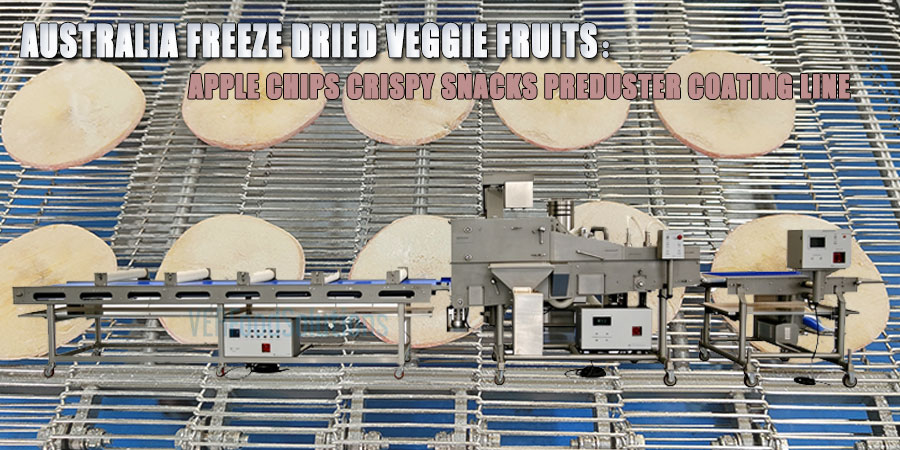
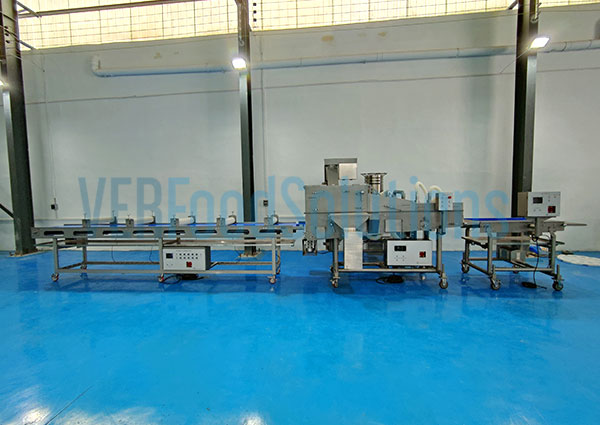
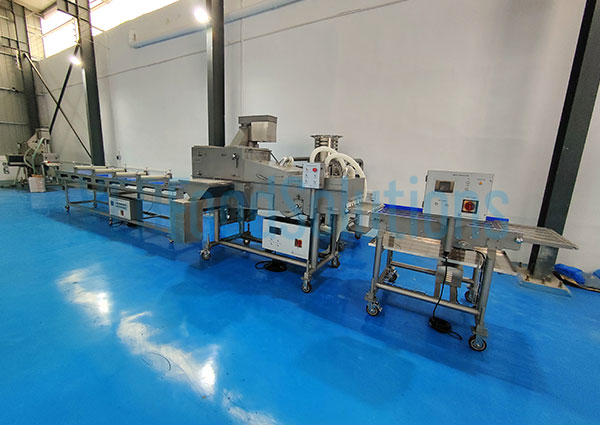
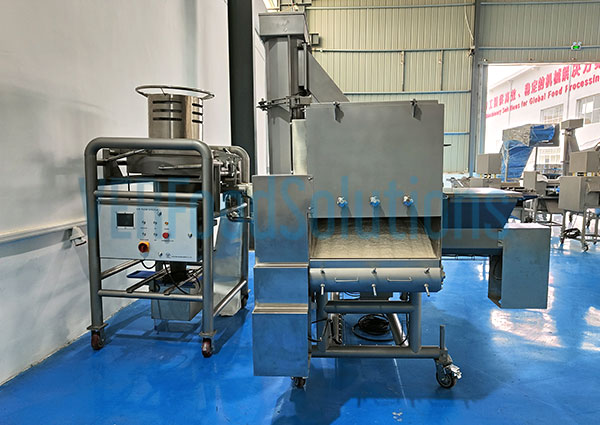
Recently we delivered one custom‑built apple preduster coating line to our Australia customer. This customer specialises in producing a broad range of veggie‑crisp snacks, including mushroom jerky, smoked chilli & garlic mushroom jerky, shiitake mushroom crisps, roasted edamame, green peas and protein‑mixed veggie crisps. This preduster coating line is specially customized for this Australia customer new products, feeeze dried apple slice. The complete solution consists of three main units: a customized PU belt conveyor, a preduster machine, and a final collecting belt conveyor for processed apple slices. Operators manually load piles of apple slices at the feed end, where 5 sets of height‑adjustable brush rollers separate stacks of over ten slices down into clean single‑layer pieces. After separation, the single‑layer apple slices travel into the preduster unit to receive an even fine‑powder pre‑coating, which helps boost the crispy texture of finished apple chips.
Multiple production trials were carried out covering different material stacking scenarios, with acceptance standards focusing on low product breakage and consistent, uniform powder coating. Several practical issues were identified during testing, and we completed step‑by‑step optimisations on sealing structures, feeding parameters and dust control. All non‑conformities were fully resolved, and relevant food‑grade certification documents were supplied as requested. In this blog post, we will walk you through every key design detail, technical upgrade, test iteration and supporting configuration of this tailor‑made vegetable crisp coating line.
PU Belt Conveyor
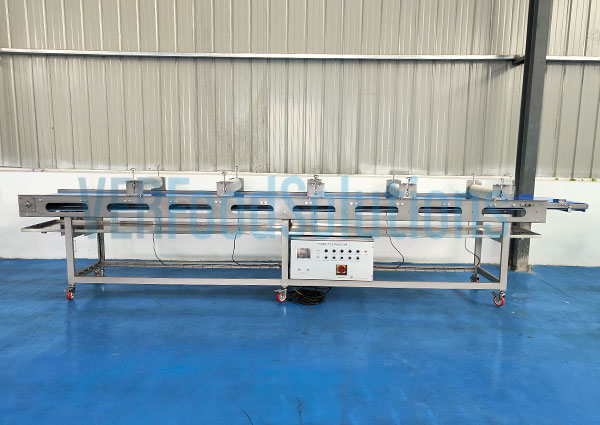
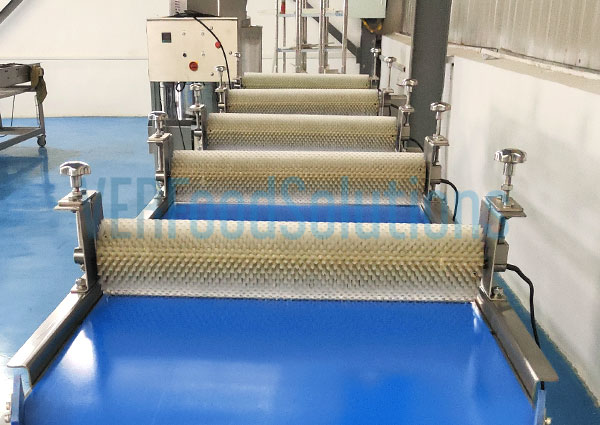
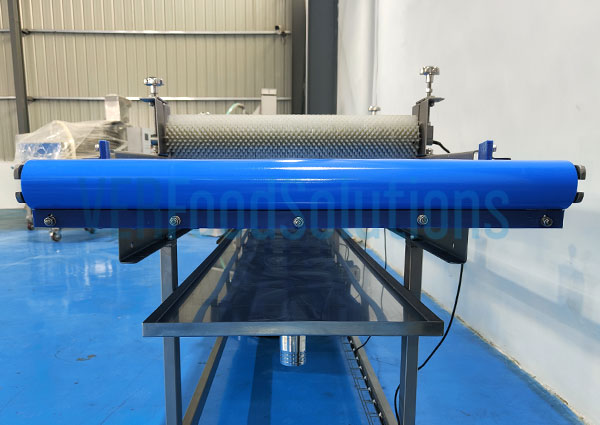
At the early project discussion, the customer initially planned to use fixed baffles to spread stacked apple slices for the Pu belt conveyor. After our technical evaluation, we recommended the 5 sets of adjustable brush rollers for more reliable and uniform separation. The customer originally requested only 3 brush rollers. To guarantee consistent separating performance, we upgraded to 5 brush roller sets. With additional auxiliary structures, it handles sticky apple slices perfectly. Operators manually load stacked 3mm apple slices at the feeding end. The 5-stage brush rollers gently separate stuck slices layer by layer, spreading apple chips into single layers on the belt for consistent powder and crumb coating.
Customizable Rollers
The PU belt conveyor machine is fitted with 5 sets of detachable height-adjustable brushes. The brush height can be set to multiple gaps such as 12 mm, 6 mm, 3 mm to match 3mm apple slice thickness. Brush rollers can be fully customized; roller body and bristle material can be modified according to your material properties. The brush assemblies are detachable for easy cleaning and replacement, which simplifies sanitation work in food workshops. Height adjustment is operated by screws. Operators can quickly adjust the clearance between brushes and PU belt to control separating intensity, preventing apple slice damage or incomplete separation.
Independent Adjustable Speed
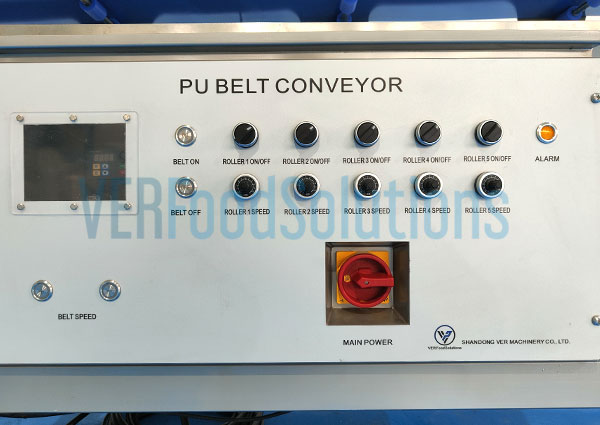
Separate drive system enables independent speed control for the belt and each brush roller. One motor drives the PU conveyor belt; belt speed directly links to your target production capacity. Five brush rollers are individually powered by 5 small 24V motors. The roller speed controls slice separation. Operators can tune roller speed separately according to apple moisture and sugar level without changing belt speed. This independent speed design offers great flexibility for different batches of raw apples.
Infeed Guide Bars
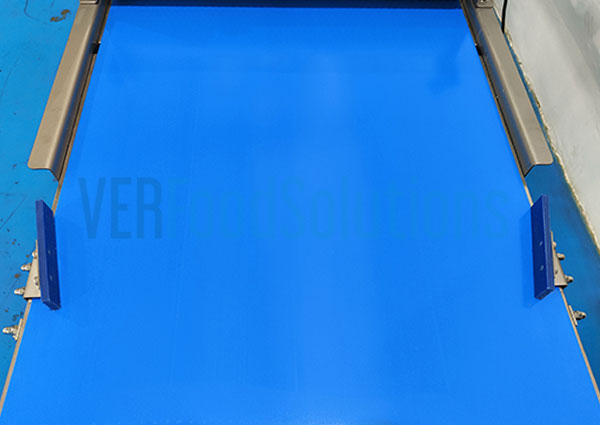
Tapered guide bars are fitted at the feeding inlet. Stacked apple slices loaded manually are guided toward the center of the PU belt smoothly by the tapered guide structure, entering the brush separating zone neatly. The guide bars correct material position, avoid off-center piling and uneven feeding, reduce manual sorting work and ensure stable feeding.
Anti-drop Side Baffles
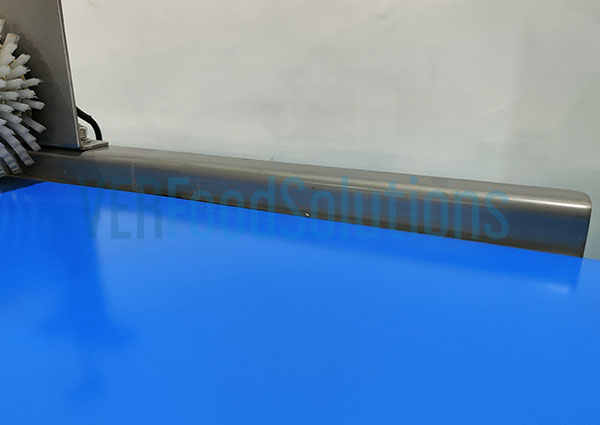
Full-length side guard baffles run along both sides of the conveyor. Side guard baffles are installed to stop apple slices from falling off during conveying and separating. Thin, sticky apple slices tend to shift sideways while being brushed and separated. The side baffles keep materials within the working width of the PU belt, preventing product loss and floor contamination. The baffles can be removed easily for washing and sanitation.
Machine Interface Design
We implemented a custom interface design between the PU belt conveyor and the downstream preduster machine. The lower edge of the PU belt fits neatly into the inlet of the preduster machine. This connection eliminates gaps at the joint of the two pieces of equipment. As apple slices transfer from the separating PU belt to the preduster, it effectively prevents powder leakage through seams. It cuts raw material loss, keeps the surrounding production area clean, reduces workshop cleaning work, and achieves smooth, seamless material handover from the separating unit to the powder coating unit.
Preduster Machine
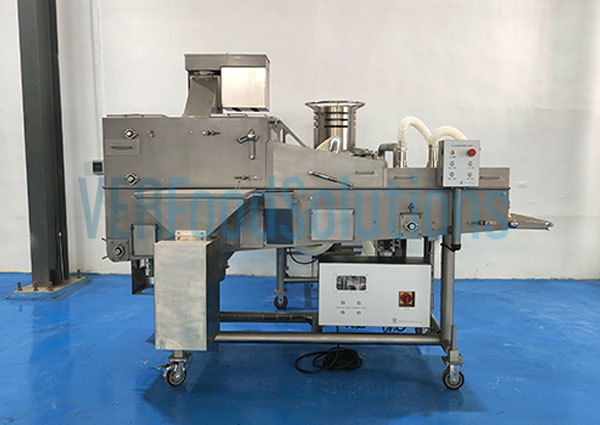
After apple slices are separated and conveyed, the product moves to the coating station. Initially, the client referred to the coating material as powder, while it is actually crumbs. At the early stage, we recommended a breading machine for this application. Once we received the material sample video sent by the customer, we found the crumbs were relatively fine. To achieve better and more even coating results, our technical team revised the proposal and recommended a preduster machine, which is better suited for coating with this fine material.
Dual-Belt System
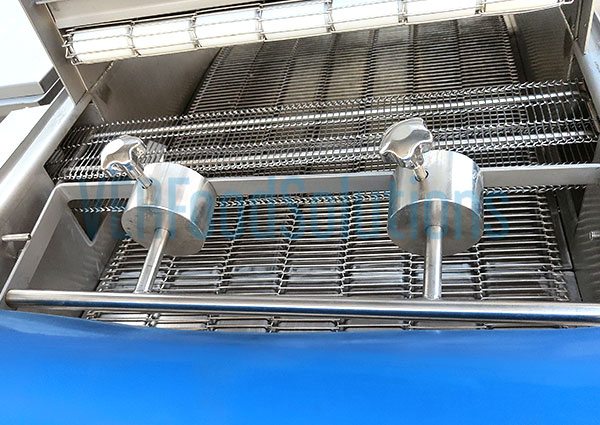
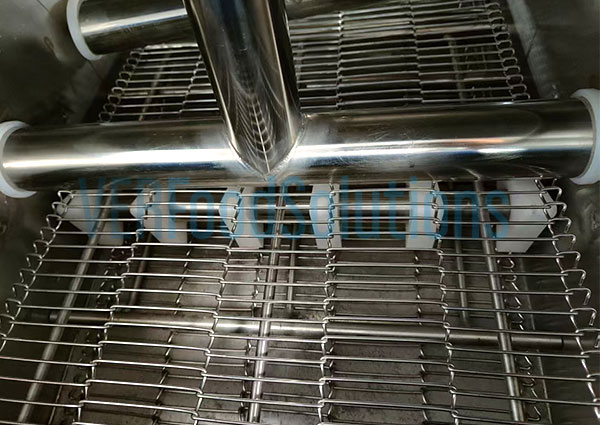
The preduster flouring machine adopts a specially engineered dual-belt system to deliver stable, homogeneous coating results for apple slices. Products are transported on the lower conveyor belt, moving steadily through the powder material bed inside the coating chamber. Meanwhile, the upper conveyor works in tandem from above to deliver controlled powder distribution across the product surface. The two belts operate synchronously and in perfect coordination to wrap fine crumbs evenly over every slice. This innovative dual-belt construction effectively reduces powder backflow and suppresses dust generation during operation. It helps maintain a cleaner, more sanitary processing zone, cuts unnecessary powder loss, and supports continuous high-efficiency food production.
Adjustable Flouring Coating Thickness
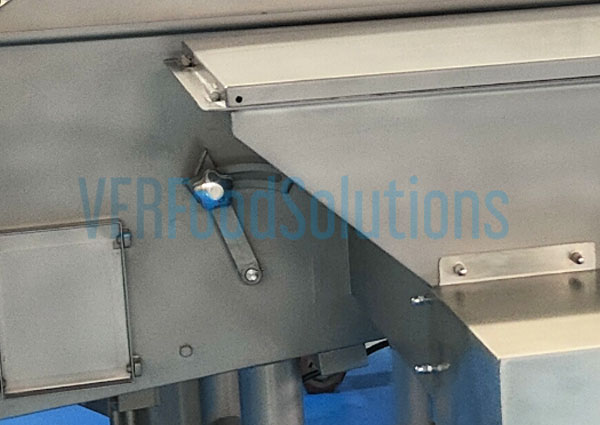
The preduster flouring machine comes with fully adjustable coating thickness, regulated by an internal adjustable baffle controlled by an external side handle. When operators lift the baffle, a greater volume of powder flows downwards to create a thicker pre-coating layer on the product. Lowering the baffle restricts powder discharge and produces a thinner coating layer. This mechanical adjustment delivers fine, accurate control over coating thickness to match different product recipes, guaranteeing ideal visual appearance and consistent flavour for the finished apple chips. Operators can observe the whole powder feeding and coating process clearly via the side viewing window, enabling real-time visual monitoring and on-the-spot fine-tuning during production. Moreover, the adjustment handle can be locked securely with a fastening nut after setting, preventing unintended position shift caused by machine vibration and ensuring stable coating performance through long production runs.
Vibrating Blocks
The vibrating blocks are manufactured from solid white POM (polyoxymethylene) material. Fitted directly to the preduster’s conveyor belt assembly, these vibration blocks activate once the machine starts running. As coated apple slices travel past this station, the vibrating blocks shake off excess loose powder from the product surface. This action removes surplus unattached crumbs while preserving the firmly adhered coating layer, delivering a thin and uniform pre-coating on each piece. Consistent coating achieved at this stage stabilises product quality and reduces variation, which lays a solid foundation for reliable results in all downstream baking and finishing processes.
Food Grade Rollers
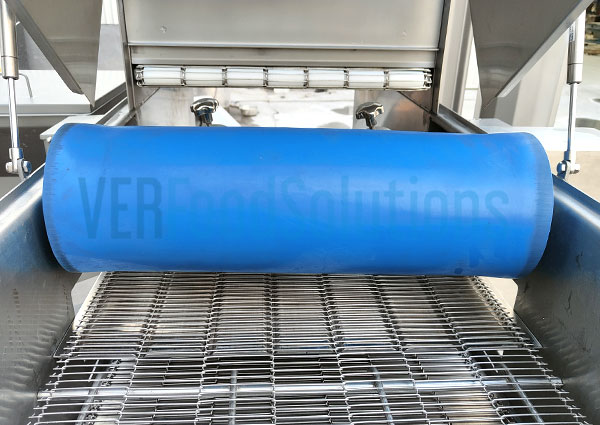
The preduster flouring machine features rollers that apply continuous pressure to the flour, gently pressing it onto the surface of the product. The rollers rotate synchronously with the passing products, ensuring even flour distribution and strong adhesion. This precise process helps prevent over- or under-coating, resulting in a uniform and consistent coating every time. All silicone accessories fitted with the rollers come with full SGS test certificates. The silicone material complies with national standard for food contact materials. It passes sensory evaluation with normal colour and no off-odour or contaminants. No discoloration, turbidity, sediment or strange odour is found in immersion liquid. All test items including overall migration, potassium permanganate consumption, heavy metals (Pb) and volatile substances meet standard requirements. Under multiple food simulants such as ethanol, acetic acid and olive oil, the overall migration was not detected. This verifies the safety and stability of the silicone parts for direct food contact, satisfying material compliance audits required by Australian food manufacturers.
Air Flow and Recycle System
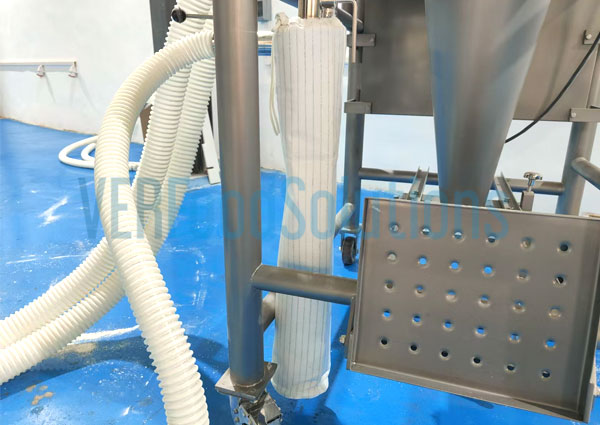
When the product passes through the preduster flouring machine, loose residual powder may stay on the surface after coating. To avoid loose powder contaminating downstream processing steps, we equip the unit with an airflow system. This airflow blows off any unattached loose powder from the apple slice surface, retaining only powder that is firmly bonded to the product. The remaining adhered powder absorbs moisture from the product surface, which benefits the subsequent baking and breading processes. The powder blown away is separated from the air stream by an advanced cyclone separator to capture fine powder particles. The collected powder drops onto the dual-layer mesh belt system. The upper mesh belt performs internal powder circulation to transport excess powder, then the vertical spiral system lifts the recovered powder and feeds it back into the coating chamber for reuse. This design is similar to the recycling mechanism of the drum breading machine: surplus powder falling through mesh gaps is captured and conveyed by the mesh belt, then elevated by the vertical spiral to complete closed-loop powder circulation. Collected powder accumulates inside the dust collector bin, which can be emptied after production for reuse. This design keeps the workshop clean and saves coating material to reduce raw material waste.
Modifications for Powder Splash
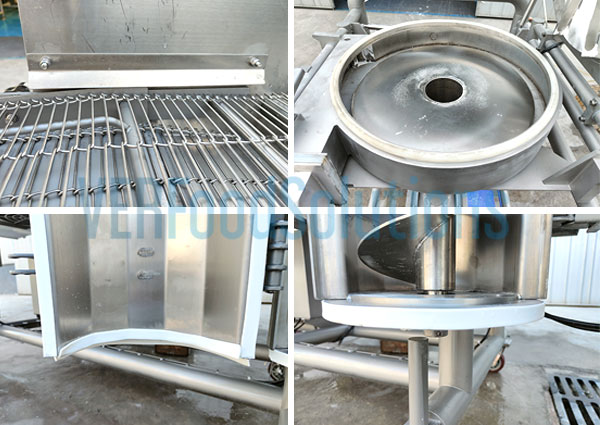
To control fine crumb flying during coating, we added multiple sealing and guarding structures on the preduster machine. A spiral seal ring is installed on the screw conveyor, and another seal ring is fitted on the upper powder return section of the air flow system to stop powder escaping through gaps. At the discharge end, food-grade silicone strips together with custom-made baffles are equipped. The silicone strips fit tightly against the outlet, forming double protection with the custom baffles to block fine crumb splashing. This greatly reduces flying powder loss, saves raw materials and maintains a clean workshop environment, meeting the production requirements of Australian food factories.
Customized Powder Collection Filter Bags
The preduster machine is equipped with powder collection filter bags as accessories. These filter bags are made of polyester anti-static needle felt (500g/㎡) and come with a full product performance test certificate. The test report verifies all key parameters of the filter material: areal density of 503g/m², thickness of 2.01mm, air permeability of 12.5 m³/m²·min. Tensile strength and elongation at break all meet national standard requirements, with calendering finishing. This anti-static filter felt works well for fine crumb recovery. During apple chip coating, it efficiently captures floating fine crumbs to reduce dust escape and keep the workshop clean. The full test certificate is available for client review to satisfy material traceability and equipment compliance audits for Australian food plants.
Belt Anti-Winding Device
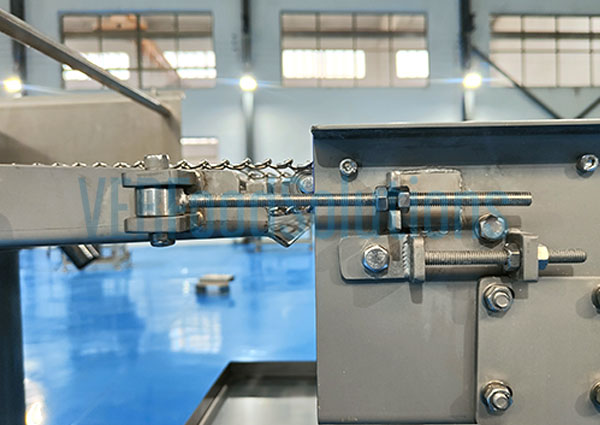
Both the preduster machine and the front belt conveyor run with mesh belts. Since both machines are fitted with movable casters, there is a risk of mesh belts tangling together during operation or after repositioning. To solve this issue, we custom-designed an anti-winding positioning assembly. It fixes the relative position of the two machines with screw fasteners. Once secured, the mesh belts operate independently without interference throughout production. This eliminates the risk of belt tangling and ensures continuous, stable running of the whole apple chip coating line.
Belt Conveyor
Customized Mesh Belt
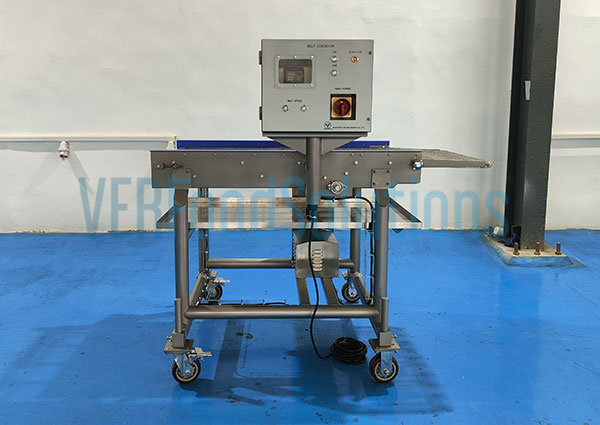
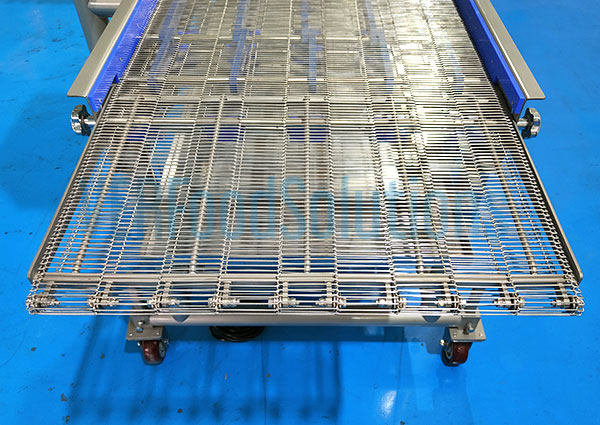
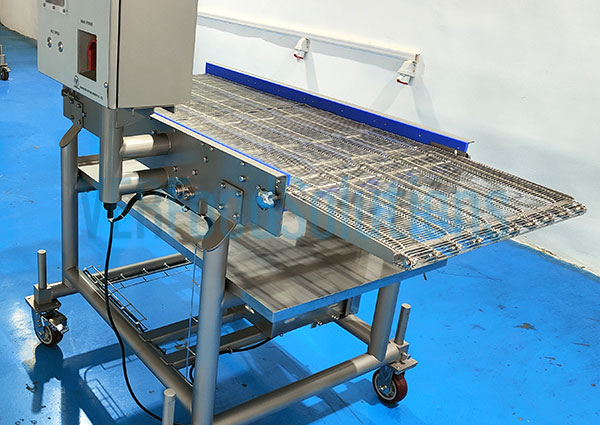
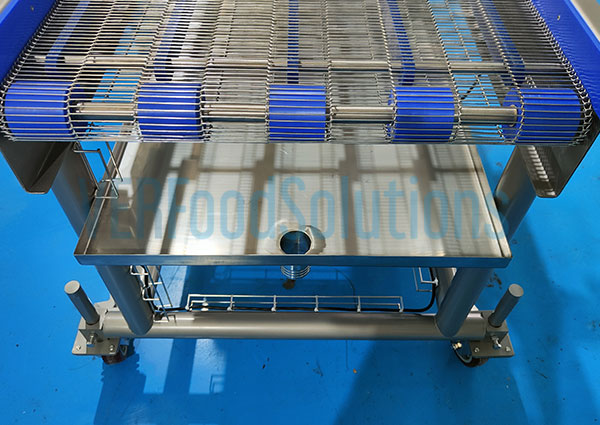
The mesh belt for this belt conveyor supports customised widths, with available options of 200 mm, 400 mm and 600 mm. Matched to the customer’s working condition of 3 mm thin apple slices and a production capacity of 300 kg per hour, we selected the maximum 600 mm wide mesh belt to avoid insufficient conveying capacity and ensure stable continuous production at the required hourly throughput. We also customised the pitch of the flat flex mesh chain (Type‑B mesh belt). The custom flat flex mesh chain has an overall width of 600 mm, a pitch of 12.7 mm, 7 meshes and a wire diameter of 2.3 mm. This tailored mesh chain balances structural rigidity, open area and powder permeability. It reliably transports the delicate 3 mm apple slices without sagging or deformation, while enabling excess fine crumbs to fall freely through the mesh gaps. The custom belt specifications are precisely matched to the customer’s product size and throughput target to maintain smooth and consistent feeding for whole coating line.
Discharge End Angle Adjustment
The discharge end of the belt conveyor can be tilted at different angles via screw adjustment. This flexible angle adjustment serves multiple practical purposes for diverse downstream production setups. It enables smooth product transition to the preduster coating machine, preparing a steady handoff for the subsequent coating process. Apart from apple slice coating, this conveyor also works well for other products such as patties and nuggets. Secondly, for customers whose downstream process is continuous frying, the adjustable inclined angle helps prevent hot oil splashing out of the fryer. For the 3 mm thin apple slices, this controllable slope gently controls their falling speed. It avoids sharp impacts and product breakage during transfer, keeps pre-coated powder intact on the slice surface, and maintains uniform slice orientation entering the next stage. This protects the fragile apple slices and preserves consistent coating quality during handover.
Removable Material Receiving Pan
Beneath the conveyor’s discharge section sits a pull-out material receiving pan. This pan can be fully slid out from the machine frame for easy access. During production, it catches stray powder and small apple debris falling from the mesh belt. When cleaning is required, operators simply pull the pan out to wipe away accumulated powder, crumbs and fragments without disassembling major machine parts. This simple design speeds up cleaning routines, reduces cross-contamination risks, and meets strict food hygiene requirements for apple slice processing.
Swivel Casters
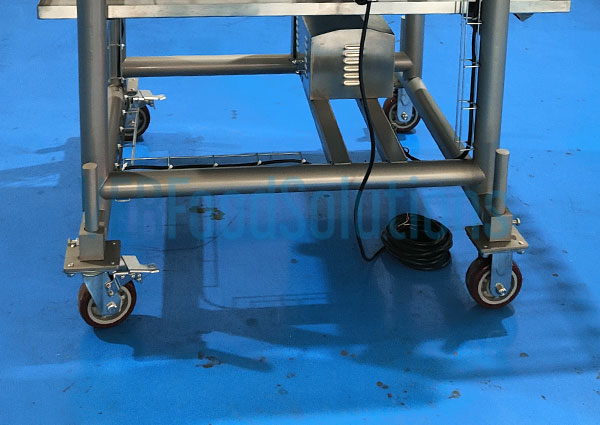
The belt conveyor is fitted with swivel casters. These casters deliver easy mobility and great flexibility, supporting quick repositioning of the machine for workshop layout adjustment and thorough cleaning. The casters also support height adjustment to align the machine perfectly with the upstream and downstream equipment, ensuring all connected machines run at a consistent, level position.
Custom Layout & General Line Drawing
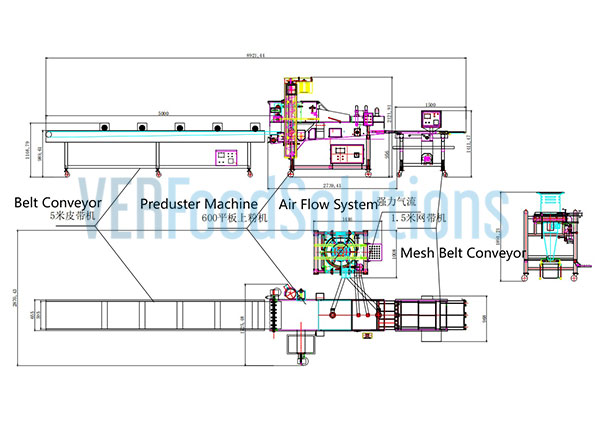
This complete apple slice pre-dusting coating line is tailor-designed with custom layout drawings to match the customer’s workshop layout and production process requirements. The overall layout integrates three core modules:5m Belt Conveyor, Preduster Machine, and 1.5m Mesh Belt Conveyor with Air Flow System. The total line length is engineered to fit within the customer’s factory space while keeping smooth material transfer between each connected station. The CAD general arrangement drawing clearly marks all overall dimensions, equipment heights, installation footprints, and relative positions of every unit. It defines assembly reference points, connection heights between machines, maintenance access space and pipeline routing. All equipment heights, transfer slopes and alignment are precisely calculated to ensure seamless handoff of thin 3 mm apple slices from the feeding conveyor into the preduster, then onward to downstream processing. The drawing serves as the official manufacturing blueprint, guiding factory fabrication, assembly and on-site installation.
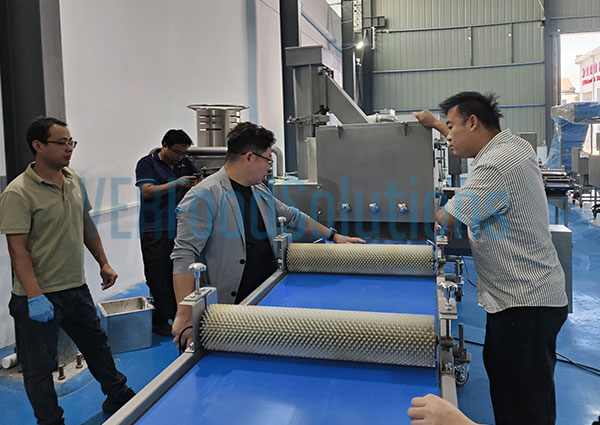
This line has passed strict factory acceptance testing in line with the customer’s rigorous URS requirements with this customer China branch team. We completed three full production‑simulation runs to replicate the messy, irregular stacking of apple slices seen under real‑world shop‑floor conditions. Test samples were distributed across left, middle and right sections of the conveyor belt, simulating chaotic multi‑layer pile‑ups of apple slices to mimic actual feeding chaos. Key acceptance criteria included intact apple slices at discharge, controlled breakage within permitted tolerance, even powder coating and low residual powder. Several practical performance gaps were uncovered during simulation trials, prompting step‑by‑step equipment optimisations. We provided the full spare‑parts list and food‑grade material certificates as requested. Sealing rings were installed to stop powder leakage from the base of the feed screw, and edge‑blocking parts were added to prevent powder blowing onto the floor. Sealing components were upgraded to cut airborne dust. To handle irregular apple‑slice stacking, we tuned line‑wide belt heights and feeding speeds for consistent powder coverage. We also recommended a 4‑hour cleaning interval for the 25L dust collector to prevent overfilling. Every detected issue was fully closed out. This iterative optimisation ensures the complete line satisfies the customer’s strict acceptance requirements for apple‑slice pre‑dusting production.
Electrical Components & Brand Selection
All electrical components of this apple slice pre-dusting coating line adopt well-known branded parts for stable and reliable operation.
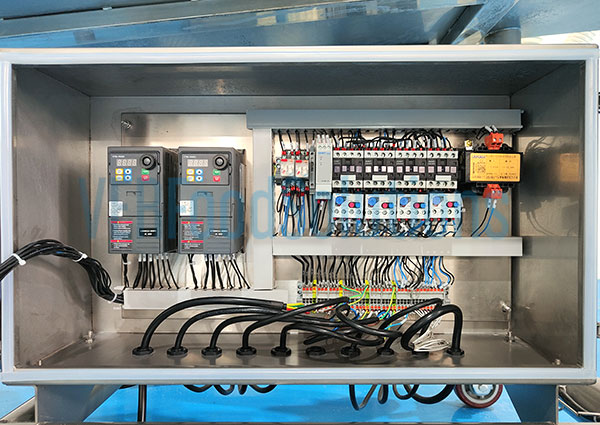
For the 5m belt conveyor, preduster machine and mesh belt conveyor (including the integrated high-force airflow system of the preduster), main electrical parts cover gear motors, brush motors, frequency inverters, transformers, DC24V intermediate relays, power switches and control buttons. Key electrical brands include Nuofan for geared motors,Ruipu for inverters, Weidmuller for relays, together with control components from Shanghai Tianyi. The whole electrical system is designed for 415V, matching the customer’s power supply requirement. Every electrical component is fully listed on the BOM, with complete model specifications. All electric parts feature IP56/IP67 protection grades, good dust-proof and waterproof performance, adapting to the humid environment of food processing workshops. This carefully selected electrical configuration delivers steady operation, reduces electrical failure risk and supports long-hour continuous production.
Food Grade Material Compliance & Certifications
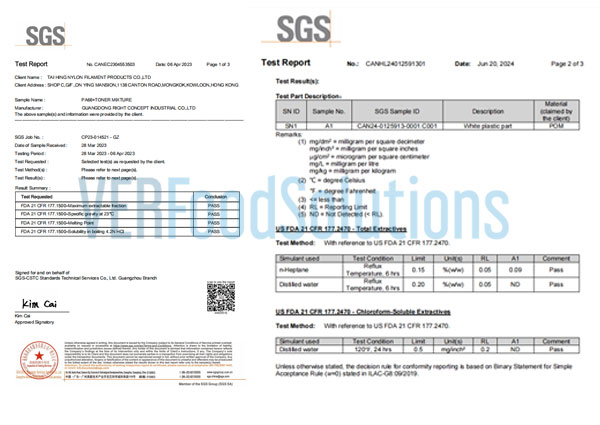
All food‑contact parts across the full coating line are supplied with complete accessory certification documents to meet hygiene audit requirements for Australian food plants. The whole machine frame and hardware, down to every single screw, are constructed from 304 stainless steel with supporting material certificates. All product‑contact parts adopt food‑grade SUS304 stainless steel that resists fruit‑acid corrosion, supports direct water washing and inhibits bacterial growth, making it well‑suited for high‑sugar apple‑chip processing. Components on the belt conveyor including PA66 cleaning brushes and silicone baffles have passed third‑party food‑contact testing. Its custom mesh chain is built from certified 304H stainless steel. For the preduster machine, key food‑grade accessories such as silicone rollers, sealing elements, dust collection filter bags and airflow PU hoses are all supported by valid third‑party test certificates. All motors are fitted with safety covers to block powder and apple crumbs for better electrical protection and operational safety. Careful material selection prevents harmful substance migration and minimizes cross‑contamination for safe apple chip production.
Plenty Accessories
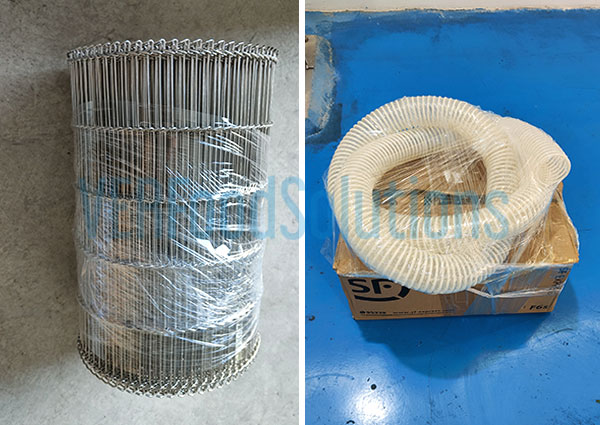
We supply a complete package of supporting accessories for this custom apple slice pre-dusting coating line to guarantee reliable operation and simplify routine maintenance. Included are spare stainless steel mesh belts for both the preduster PU mesh conveyor and the final mesh belt conveyor. As complimentary bonus items, we provide 3 spare mesh belts at no extra cost, each measuring 0.5 meters long. Beyond these gifted spare belts, no additional spare parts were purchased by the customer. Our accessory package also comes fully equipped with blower hoses, control buttons, bearings and assorted related fittings, ready to keep your production line running smoothly and minimize unexpected downtime.
Optimized Packaging Solution
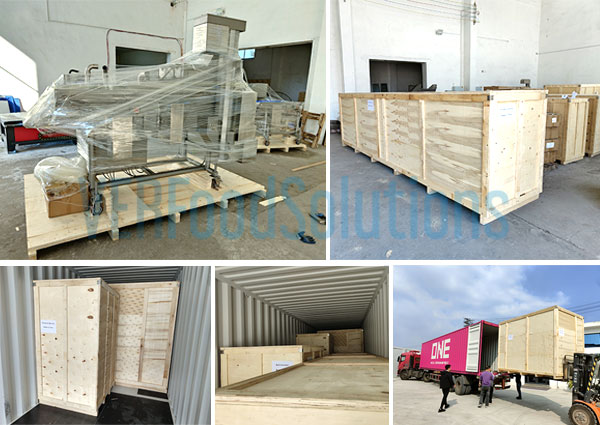
This complete apple-slice pre-dusting coating line consists of three individual machines, each securely packed in separate export‑grade plywood crates meeting international maritime shipping specifications. After loading into the shipping container, every crate will be firmly fixed to the container floor, with tensioned anchor straps secured to the container ceiling to eliminate shifting, collision and potential damage during long‑distance ocean transit. Printed product operation manuals and circuit diagrams are placed inside one of the crates for quick customer reference.
This customized apple pre-dusting coating case demonstrates how tailor‑made solutions can address real‑world challenges in fruit‑and‑vegetable crisp production. Every modification — from the upgraded multi‑set brush rollers, powder‑recycling airflow system, to food‑grade material selection and strict pre‑shipment acceptance tests — was driven by the customer’s actual production conditions and Australian food‑factory audit standards. One‑size‑fit‑all standard machines cannot always handle fragile, sticky products such as thin apple slices. If you are also working on veggie crisps, fruit chips or similar coated snack projects and face pain‑points including material separation, uneven coating, high breakage or excessive dust, feel free to get in touch with our technical team. We can evaluate your raw material, capacity target and workshop conditions to develop a matching custom coating‑line proposal for your business.

Leave a Reply