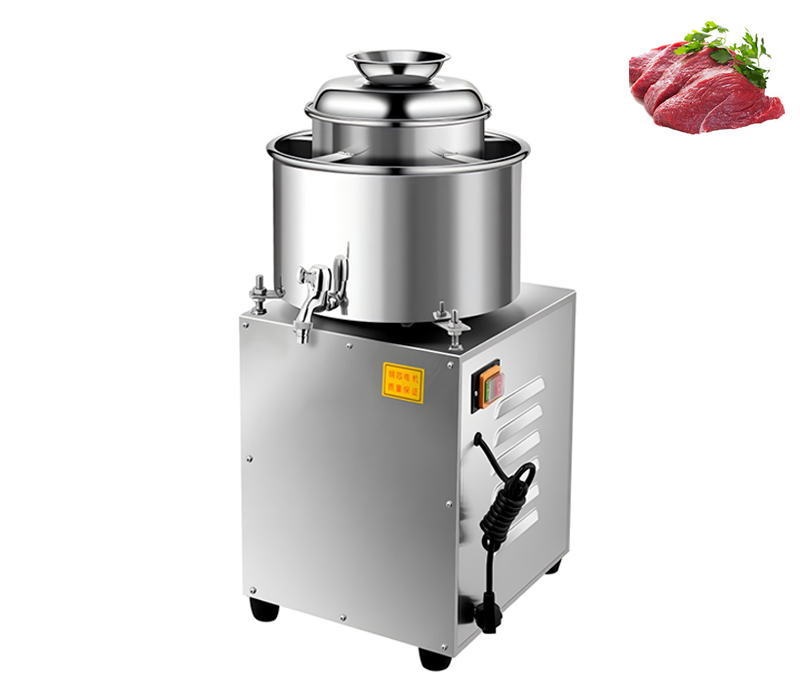
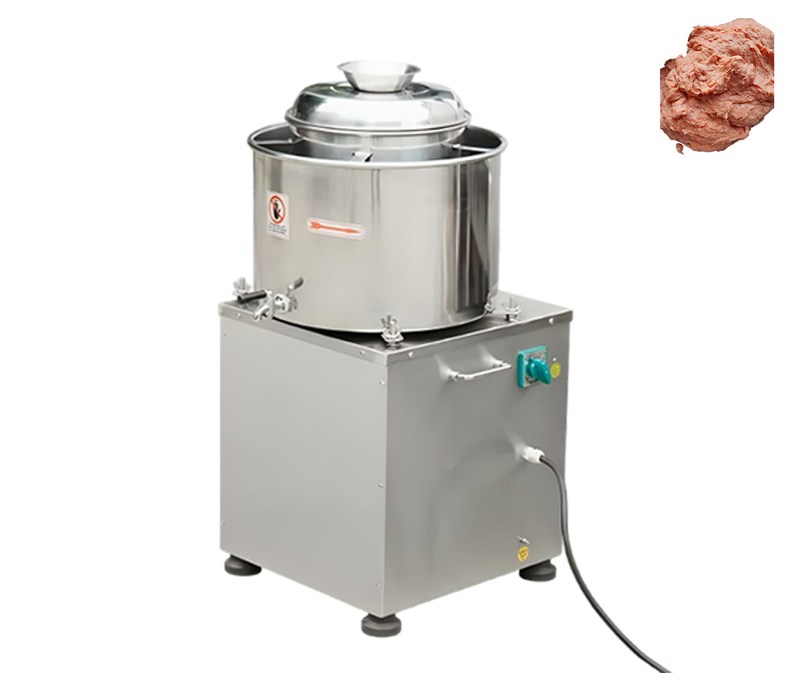
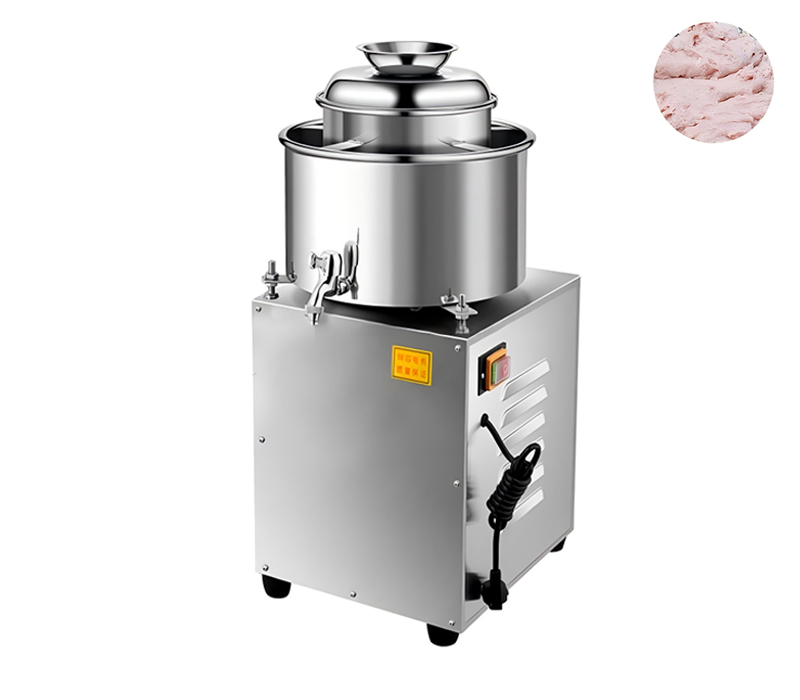
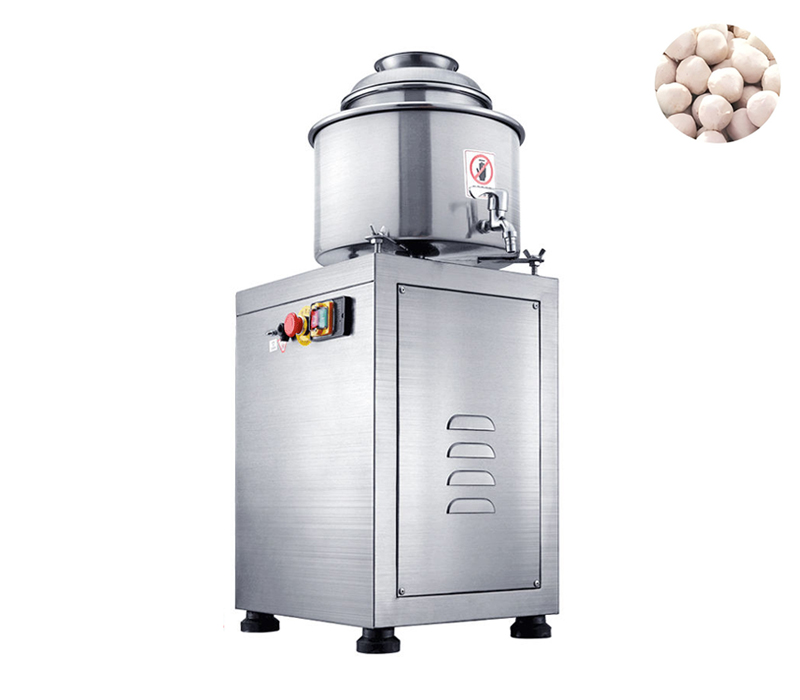
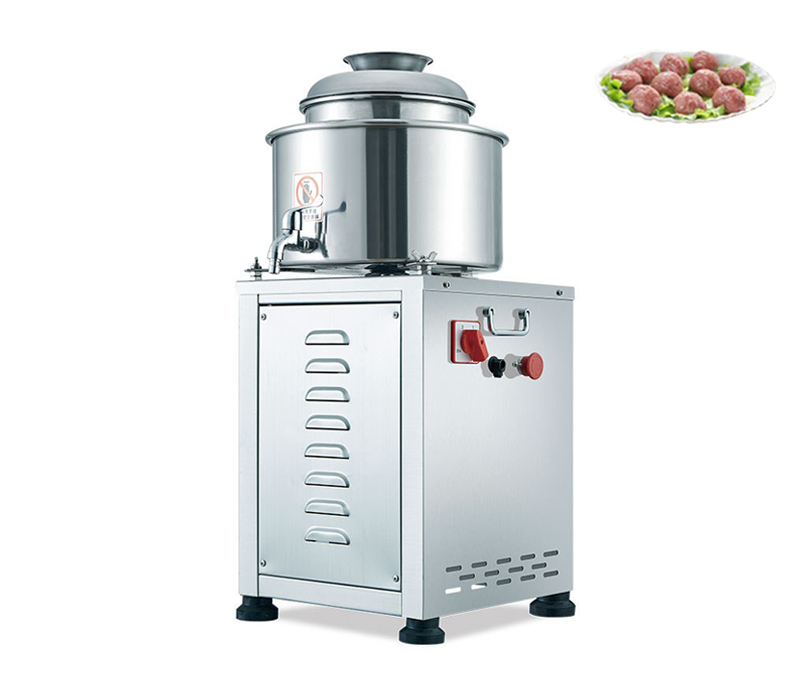
Why should I order a meatball beater machine?
Ordering a meatball beater machine from VERfoodsolutions offers numerous advantages, including:
- Exceptional Homogenization: It ensures a smooth, uniform meat paste, improving the binding, elasticity, and overall texture of your meatballs.
- Versatile Applications: Perfect for processing not just meatballs but also rice dumpling pastes, vegetable and fruit purees, and chili sauces, making it a multifunctional addition to your kitchen or production line.
- Efficient and Rapid Processing: Thanks to its advanced three-dimensional four-blade design and powerful motor, it achieves ultra-fine, consistent results in just 8 seconds, saving time and increasing productivity.
- Temperature Control: The double-layer reservoir allows for the addition of ice water or ice cubes during processing, locking in flavors and nutrients while maintaining optimal low temperatures.
- Automated Workflow: It seamlessly integrates with other equipment like meat grinders and forming machines, reducing manual labor and streamlining your production line.
- High-Quality Construction: Made from premium food-grade stainless steel and imported blades, ensuring durability, safety, and easy cleaning.
Investing in this mixer enhances your production efficiency, ensures high-quality finished products, and supports diverse recipe requirements—making it an essential tool for professional meatball manufacturing.
How to operate the meatball beater machine to produce meat paste?
a. Water Preparation
Fill the circumferential cooling tanks of the machine with an adequate volume of cold water to guarantee stable and uninterrupted operational performance.
b. Ice Addition
Unlatch the machine cover and load pre-prepared food-grade ice cubes into the mixing tank, thereby sustaining the requisite low-temperature environment throughout the entire processing cycle.
c. Feeding and Processing
Dispense the diced meat uniformly into the feed inlet at a steady, to ensure consistent material intake and processing efficiency.
d. Stirring and Conditioning
Following cover removal, deploy a stirrer to thoroughly agitate the meat mixture. If needed, incorporate small batches of ice water incrementally to modulate viscosity, until the meat paste attains a homogeneous, gelatinous consistency with no discernible particulate matter.
e. Shutdown
Upon reaching the target paste texture, power off the equipment and retrieve the finished product for subsequent procedures.
What precautions should be observed when operating the meatball beater machine ?
a. Electrical Safety
Ensure the machine is connected to a grounded power supply before operation. Do not touch any electrical components with wet hands to prevent electric shock hazards. Power off the equipment completely during maintenance or cleaning.
b. Mechanical Safety
Never insert hands, tools, or any foreign objects into the feed inlet or mixing tank while the machine is in operation. Always latch the machine cover securely after ice addition to avoid splashing of materials or accidental contact with moving parts.
c. Food Safety
Use only food-grade ice cubes and potable ice water for processing to comply with food hygiene standards. Clean and sanitize the mixing tank, stirrer, and feed inlet thoroughly before and after each use to prevent cross-contamination.
d. Operational Safety
Operators should wear appropriate personal protective equipment (PPE), including non-slip gloves and safety goggles, to avoid splashes or mechanical injuries. Do not overload the feed inlet; adhere to the recommended material feeding rate at all times.
e. Post-operation Safety
After shutdown, wait for all moving parts to come to a complete stop before retrieving the finished product. Drain residual water from the cooling tanks regularly to prevent bacterial growth and equipment corrosion.
What additional equipment can be integrated with the meatball beater machine for a streamlined production line?
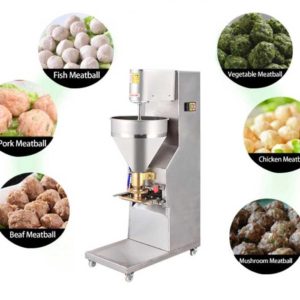
Meat is first minced in a meat grinder and then fed into a meatball beater machine for refined homogenization. The silky, uniformly textured meat paste is seamlessly fed into the meatball machine, which extrudes the mixture into spherical or oval shapes with customizable diameters, while supporting the production of both solid and stuffed variants to meet diverse product requirements. The formed meatballs are then conveyed to the blanching machine, where they undergo thermal setting via either steam cooking or hot water blanching—two configurable processes that ensure the finished meatballs boast optimal elasticity and consistent doneness throughout. The entire workflow is automated with a bin lifter, which enables smooth, continuous material transfer between the pulping machine, forming machine, and cooking line. This integrated setup eliminates labor-intensive manual handling and substantially boosts the overall operational efficiency of the production line.

Leave a Reply